
Sugar skulls Part 2 (My angel friend)

Chapter 9
In the first part of this story, I told you about the baby mummy I wanted to hold, and the canyon of grief that opened when I lost my Chichi at eight years old. My mother’s world had shattered, too. In the fog of her own profound loss, she momentarily forgot how to navigate mine. But then, a sign came—not for me, but for her.
— The dream
After Chichi passed, my mom had a vivid dream. In it, Chichi gently touched her shoulder and said, “Mija, la niña está destapada.” (My daughter, the girl is uncovered.) My mom answered, “I’m coming, Mom,” and the sound of her own voice woke her. She rushed to my bedroom. There I was, asleep like a starfish in the middle of my full-size bed, all my blankets kicked to the floor. My mom covered me, and she cried. It was her sign: a call to heal, to focus, to mother her little girl again. To make sure I was warm and safe in a world that had suddenly grown so cold.
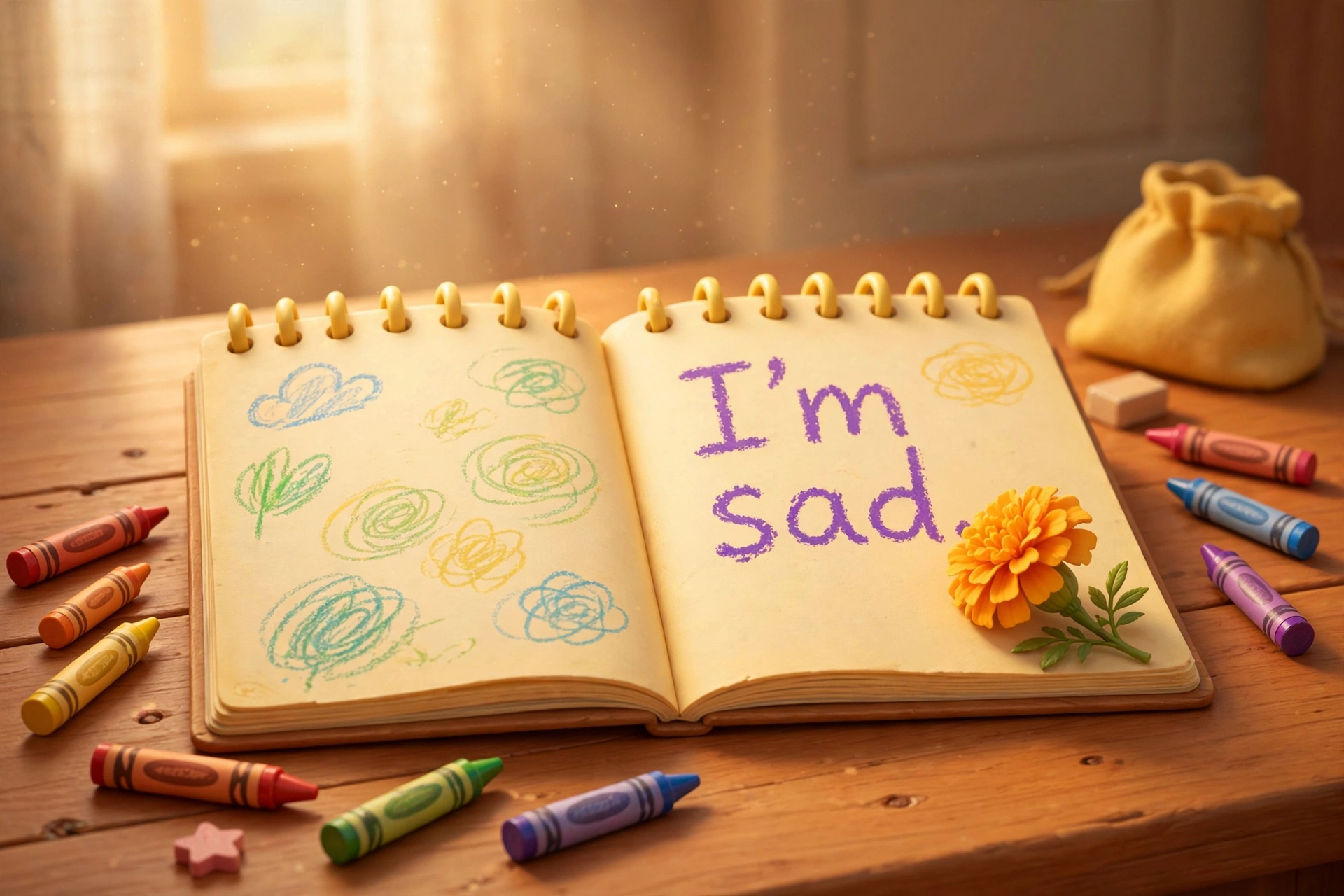
Without Chichi, I had to grow up a little faster. I was in second grade. I remember the quiet, private moments of grief, writing simply in my notebook: “I’m sad.” But my mom, now steadfast, made sure life had structure and love. She ensured I went to school with a neighbor. And our neighbors—the family in the house directly across the street—became our sanctuary, a big family divided only by pavement.
— Caro
They were our lifeline. There was a Mom and Dad, engineers like my father, who became his best friends for life—a beautiful, enduring friendship I was privileged to witness. They had three beautiful daughters. The youngest, “Chavis,” was just four months younger than me, my built-in companion for birthday parties and play. The oldest was gloriously too cool. But the middle sister, Caro, was something else entirely.
Caro was my angel friend. She knew what I was. The year Chavis and I were born, Caro was diagnosed with leukemia. In 1970s Mexico, there was no treatment. So, Caro and her parents became travelers, journeying to Houston for care every few months. I have vivid, aching memories of Caro losing her beautiful, long hair. But what I remember more—what is burned into my soul—is that she never, ever lost her smile. Not even at the end.
I remember that morning verbatim. I was nine, just one year after losing Chichi. I went out in my pajamas to pick up my father’s newspaper. As I turned, I looked up and saw their family car, a Pacer, backing out of their garage. Caro was in the middle, nestled between her very worried parents. And still, she saw me. She waved. She smiled her radiant smile, mouthing the words: “Adiós, Ania.” (My nickname, and one of my fragment names).

The next day, I crossed the street. Their living room was full of people. In place of their big, elegant dinner table was her coffin. Open. She looked like a princess in a long pink dress, with white socks trimmed with lace (arandelas) and white shoes.
At nine years old, standing before my second profound loss in as many years, the simple sadness I could scribble in a notebook transformed into a roaring, unanswerable question: “Why?” Why her? Why that smile? Why the pink dress and the journey to Houston and the hair that fell out and the wave from the car? The child who wanted to hold the mummy now had to hold this: the brutal, nonsensical juxtaposition of devastating loss and perfect, porcelain stillness.
I will need to continue this story another time. Writing this now, the memories are visceral, the trigger is real. This is why it has taken me so long to put this to paper. My neurodivergent brain, with its vivid, unflinching recall—it can be a curse, plunging me back into the sensory world of a grieving child. But it is also my greatest blessing. It is the very tool that allows me to hold space for your pain with the same depth and detail. It is how I remember, and therefore how I witness.
This is the path of the Purple Witch. We don’t turn away from the open coffin or the uncovered child. We learn to sit beside them, to feel the “why” that has no answer, and to find a way to carry that question without letting it break us.
To be continued, with gentle care for my own heart and yours. In the comments, I’d love to know: Who was the person who taught you, in their living or their dying, about the depth of love?
With strength and tenderness,
The Purple Witch 🧹
Merida Paz
The Purple Witch, under the Purple Cape
💜 thepurplecape.ca · Just Trust