

Chapter One — The little witch is born
I was born into a big family, my beautiful caring mother and my wise and hardworking dad. My 3 superheroes or older brothers (6, 5 and 4yo), and my favorite person in the world my grandma Chichi . After 3 boys my Mom hid her dream of having a baby girl underneath her pillow shaped in a pink bow that later she will put with toothpaste in my very abundant dark straight hair. My dad ran, after stating that I was “very ugly”, back home to paint my brothers blue crib with a bright pink color and Chichi went to buy me a doll and even made her an outfit using fabric from my brother’s old clothes.

I don’t know if I can remember, maybe cause I was born neurodiverse and up-to-date I keep full memories of complete days of my childhood, or maybe because these stories were told over and over through the years. I want to clarify I’m Gen x, born in the 70s therefore even though my parents loved me beyond words they didn’t know that I was “special” because my “discapacity was not obvious and what could become a problem like my lack of attention, my non verbal brain and emotional disorder cause I was also born bipolar, I have the amazing ability to mesmerize and with my very big, smart and overachievers family, I could replicate almost everything. Therefore sometimes things didn’t make sense coming from a 3 year old little girl. My brothers gave me the nickname”Pillita”.

Chapter Two — The many faces of me
For most of my life, I believed I was a collection of contradictions. A walking mosaic of other people’s traits, borrowed manners, and adopted accents. I’d look in the mirror and wonder who would look back today—not in a metaphorical, poetic sense, but in a genuine, bewildering one. Which set of gestures, which tone of voice, which personality would be in charge? At 53, I finally have the word for it: autism. And with that word comes the understanding of a core experience for so many autistic girls and women: we are often perceived as liars, not because we are deceitful, but because we are supreme adapters. Our survival manual was written by observing everyone else. From my earliest memories, my brain operated like a sophisticated recording device. Every interaction, every character in a book or movie, every friend, every cousin—was a potential script. I didn’t just listen to them; I absorbed them. Their speech patterns, their accents, their laughs, their opinions on things I didn’t even care about. It wasn’t a conscious choice to be fake; it was a primal directive to blend in. To crack the impossible code of “how to be a person.”
This mimicry marked my entire life, creating a childhood that, in retrospect, looks like a series of poignant, earnest attempts to get it right. I remember being seven years old, sobbing to my loving, bewildered mother with a profound sense of injustice. “You don’t love me as much as my brothers!” My evidence? While my brothers had wonderful, cozy birthdays at home with a cake and a piñata, mine were at a big party salon with tons of food, a magician (because I hated clowns), and a lovely new dress. In my mind, their simpler party was the “right” kind of love, the one I saw in movies and other families. My extravagant party was a deviation from the script, and I interpreted it as a flaw in affection. I was mimicking a template of “normal family love” I’d seen elsewhere, and our reality didn’t match.

I remember insisting on carrying chewing gum because my cool older cousin did. It wasn’t about the gum. It was about the gesture—the effortless, casual offer to a friend. It was a prop in my performance of “cool kid.” I watched the other children crying on the first day of preschool, their faces crumpled in fear. So I stood at the entrance, decided this must be the required ritual, and made myself cry too. It wasn’t that I felt scared in that moment; I just understood it was what one did here.

This constant, exhausting adaptation creates what the world often sees as inconsistency, or worse, dishonesty. “You said you loved this band last week, now you say you hate it?” (I was mirroring the friend I was with). “Why is your accent a little different today?” (I’d been binge-watching a British show). To the outside world, this looks like shifting sands, a lack of a solid “self.” We get labeled as flaky, fake, or manipulative. But it’s not a lie. It’s camouflage. It’s the desperate, brilliant, and draining strategy of a brain trying to navigate a social world without an innate map. We assemble a personality, piece by piece, from the people and stories around us, hoping to find a combination that finally lets us pass, that keeps us safe from the glaring spotlight of being “other.” Now, at 53, I look back at my myriad of selves—the book heroine, the cool cousin, the quiet observer, the exuberant friend—and I don’t see a liar. I see an archaeologist uncovering my own truth. I see a survivor. The realization isn’t “I have no personality.” It’s “My personality was forged in the workshop of observation.” The core me was always there: the one feeling deeply, cataloging meticulously, seeking connection desperately. She was just speaking in a thousand borrowed tongues until she could learn her own native language. I am not a collection of contradictions. I am a symphony of adaptations. And finally, I am learning to be the conductor.
Chapter Three — The Library that raised me
Before I knew how to make sense of the world on my own, I learned it through the spines of books. Our house wasn’t just a home—it was an archive. Books lined every room, stacked on shelves, piled on side tables, perched in corners. Encyclopedias stood like solemn guardians in the hallway, their pages holding answers to questions I hadn’t even learned to ask yet. I remember the sheer, visceral urgency I felt to join that silent conversation. Before I could properly read, I would trace the letters with my fingers, desperate to decode the magic that held my family so captive. In the car, I’d painstakingly sound out every street sign, every billboard, every passing truck logo—a tiny, relentless commentator that must have driven my family to distraction. But I had to. I had a mission.
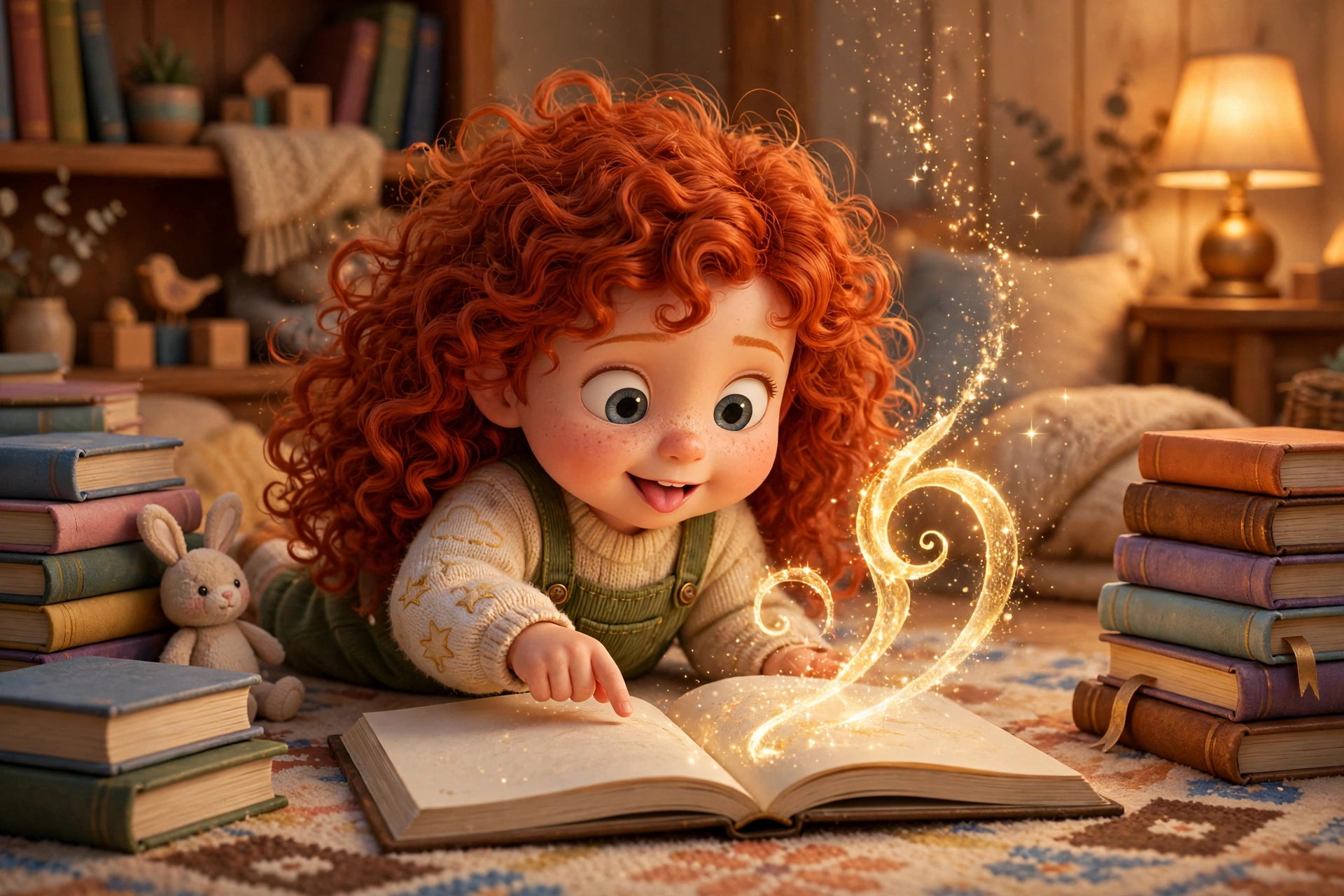
You see, in our house of voracious readers, every story came with a chorus of interpretations. My parents, my brothers, even my grandma Chichi—each would read to me, or recount a tale, through the unique lens of their own life. Chichi’s voice, warm and weathered, spun fairytales into family legends. A dragon in my father’s version was a force of nature; in my mother’s, a tragic hero; in Chichi’s, it was almost always a metaphor about someone from the old country. I was surrounded by narratives, but I was lost in translation. I was tired of being the only one who couldn’t consult the original text. I refused to be the sole alphabet in a house full of novels.
So I read. I read everything they talked about. That eager, aching need to belong to the literary dialogue became my syllabus. I started with Little Women, finding a sisterhood in the March family that echoed my own. I fell completely into the starlit melancholy of The Little Prince—it remains my favorite, a guide to the heart’s invisible truths.

I charged through the swashbuckling adventures of The Three Musketeers, puzzled over the noble madness of Don Quixote, and, by second grade, was cautiously navigating the dense, poetic forests of Shakespeare. If it was on a shelf or in a conversation, it became my quarry. I was building my own lexicon, not just of words, but of the worlds my family lived in when they were reading. What I realize now, with the gentle clarity of hindsight, is that my neurodiversity was a silent, shaping presence in all of this. Long before any diagnosis, my family had instinctively built the perfect ecosystem for my mind to thrive. That relentless drive to read every related text, to master the canon of our household, wasn’t just curiosity—it was the early fingerprint of a brain that seeks patterns, completion, and depth. The way I could hyperfocus for hours, lost between the pages of The Little Prince while the real world faded away, wasn’t me being “quiet”—it was my neurology finding its most natural state. The overwhelm I sometimes felt in noisy rooms could always be steadied by the weight of a book in my hands. Without knowing the why, they provided the how. They never pathologized my intensity; they fed it. They never shushed my endless, looping questions about the stories; they’d just smile and find another book that might hold the clue. Chichi would patiently listen to me dissect the logic of a fairy tale, her eyes soft with encouragement, never dismissing it as “too much.” Our chaotic library was a non-linear, sensory-rich universe where my particular way of moving through the world—obsessive, detail-oriented, seeking connection through subject—wasn’t just allowed, it was quietly honored. That book-filled world taught me more than literacy. It taught me that there are infinite ways to interpret a life. It taught me that my neurodiversity, though unnamed, was not a barrier to that understanding but often its conduit. My deep focus was the engine that powered my journey from Little Women to Shakespeare. My need for context was the compass that led me through every book my family loved. It was the proof that a different kind of mind could find its language, its belonging, and its strength—not in spite of its depths, but because of them. Our library was my first classroom, my sanctuary, and the quiet, steadfast proof that my family—Chichi included—was preparing me for a world of depth and complexity. They did it simply by sharing the one they lived in, page by patient page, trusting that I would find my way through the chapters, just as I was.
Chapter Four — The little witch in a boy’s world
If you remember, I was born into a squad. A ready-made family that came armed with three big brothers, aged six, five, and four. I arrived like a little weirdo kitten into a den of wolves—but in the very best sense of the word. They were strong, good-hearted, smart, and natural overachievers. Above all, they carried a fierce, protective love for our parents, especially our Mom. That devotion was their north star; they loved and cared for her with unwavering loyalty until she passed from cancer nine years ago—a chapter I, heartbreakingly, wasn’t there for.
But going back to my amazing brothers: growing up with them was a daily masterclass in chaos and connection. Every day, something happened. A fistfight over the remote, a dramatic backyard accident, a conspiracy to avoid chores. My little neurodiverse brain was in a constant state of study. I’d watch them through my big brown eyes, a silent admirer from the sidelines, trying to decode their world.
It wasn’t just about learning who they were, but absorbing what they loved. I became a tiny archivist of their interests. My oldest brother’s passion for airplanes and fast cars seeded a lifelong obsession—my favorite, to this day, is an Aston Martin. My other two brothers bled black and gold, making the Pittsburgh Steelers my forever NFL team. I braved every Stephen King adaptation and The Omen, enduring vivid nightmares afterwards, just to be part of the post-movie analysis. Their friends’ names, their after-school stories, the books they left on the coffee table—it all became part of my curriculum.
For a long time, I didn’t have the words for what I was doing. Now I understand: this was my version of being an autistic girl in a neurotypical world. Mimicry isn’t a lack of self; it’s often a survival toolkit, a deep desire to connect, and a form of love so intense it wants to merge with its source. We learn to blend by studying the people we adore, assembling a mosaic of behaviors, interests, and rhythms that say, “See? I’m like you. Let me stay.”
Which is why, until now, I’ve carried a secret shame about these memories. A nagging fear that if I told my brothers how much of my world was built from the blueprints of theirs, they might think I was faking it. That my love for the Steelers was just copycat loyalty, or that my opinions on Stephen King were borrowed, not earned.
But I know, in my bones, that’s not true. You don’t fake a devotion that lasts decades. You don’t borrow a passion that becomes part of your own heartbeat. Those interests were the bridges they unknowingly built for me, and I crossed over, making them my own. They were the threads I used to weave my place in the family tapestry.
So, to my wolves—thank you for the chaos, the protection, and the unintentional blueprints. That weirdo kitten was always watching, and she learned from the best.
Chapter Five — My curls: a blessing or a warning?
My Rebellious Curls
I was born with a head full of dark, straight hair, but little did anyone know, my curls had other plans. A few months later, they started to sprout, and my mom’s life became a whirlwind of trying to tame them. She’d use all her tricks to keep me still while she attempted to corral my curls into cute pigtails. I’d squirm and wriggle, but she’d patiently work her magic, making me look like a tiny, adorable doll.
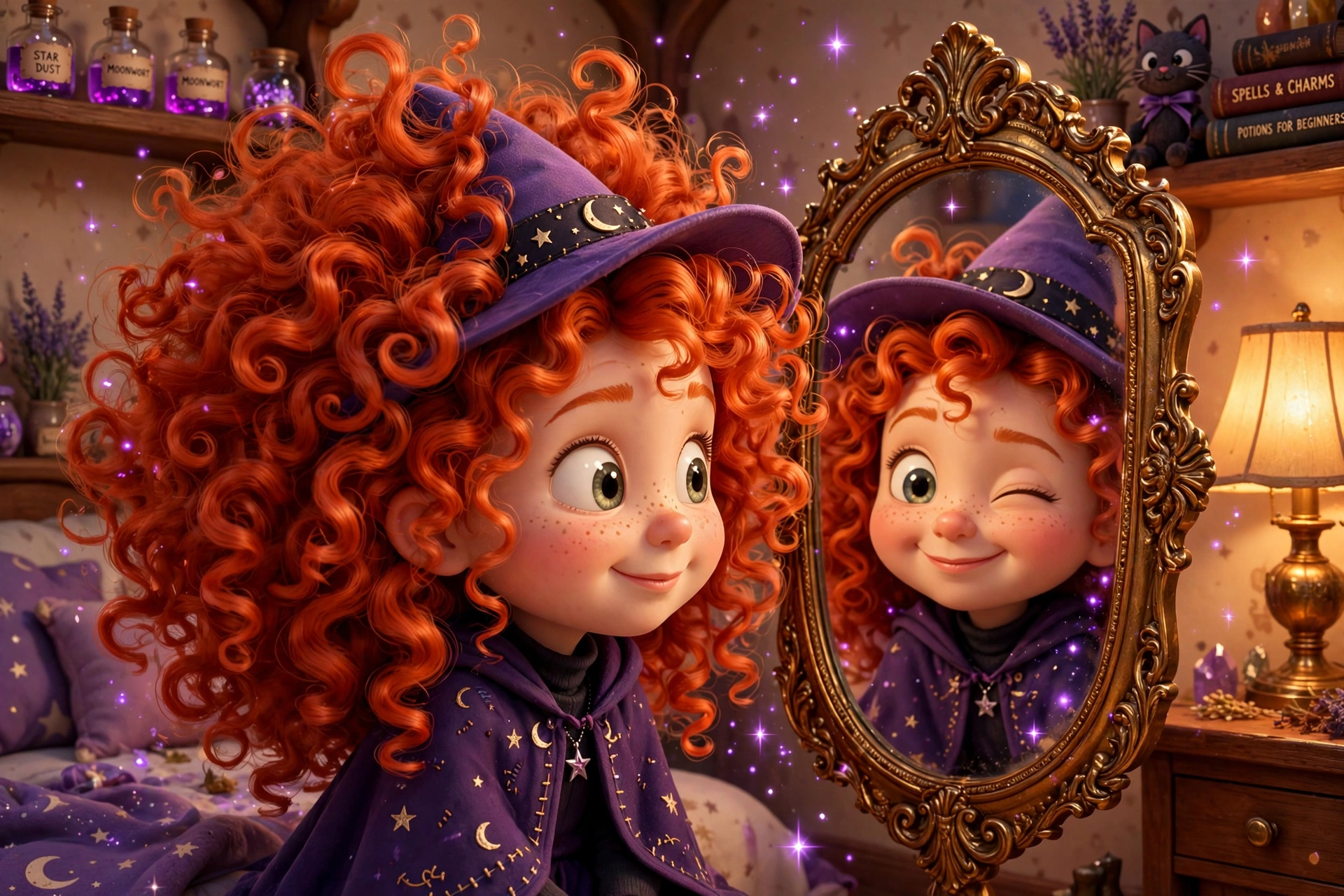
Those school-day mornings were a ritual. My mom would comb my hair, pulling those pigtails tight, giving me a slightly oriental look that I’d tolerate only because it made her happy. But there was one thing that could ruin our morning routine: my brothers’ nicknames. They were masters at coming up with creative monikers, and while I’d laugh along with them when they teased others, it was a different story when I was the target.
One night, my mom was trying to braid my hair into two neat plaits. My brothers sauntered in, and T, the oldest, said with a grin, “You look like ‘LA India Maria’!” My heart sank. I didn’t know whether to laugh or cry, but cry I did. The nickname stung, and I couldn’t stop the tears flowing until my mom abandoned the braids and let me go to bed with my curls wild and free.
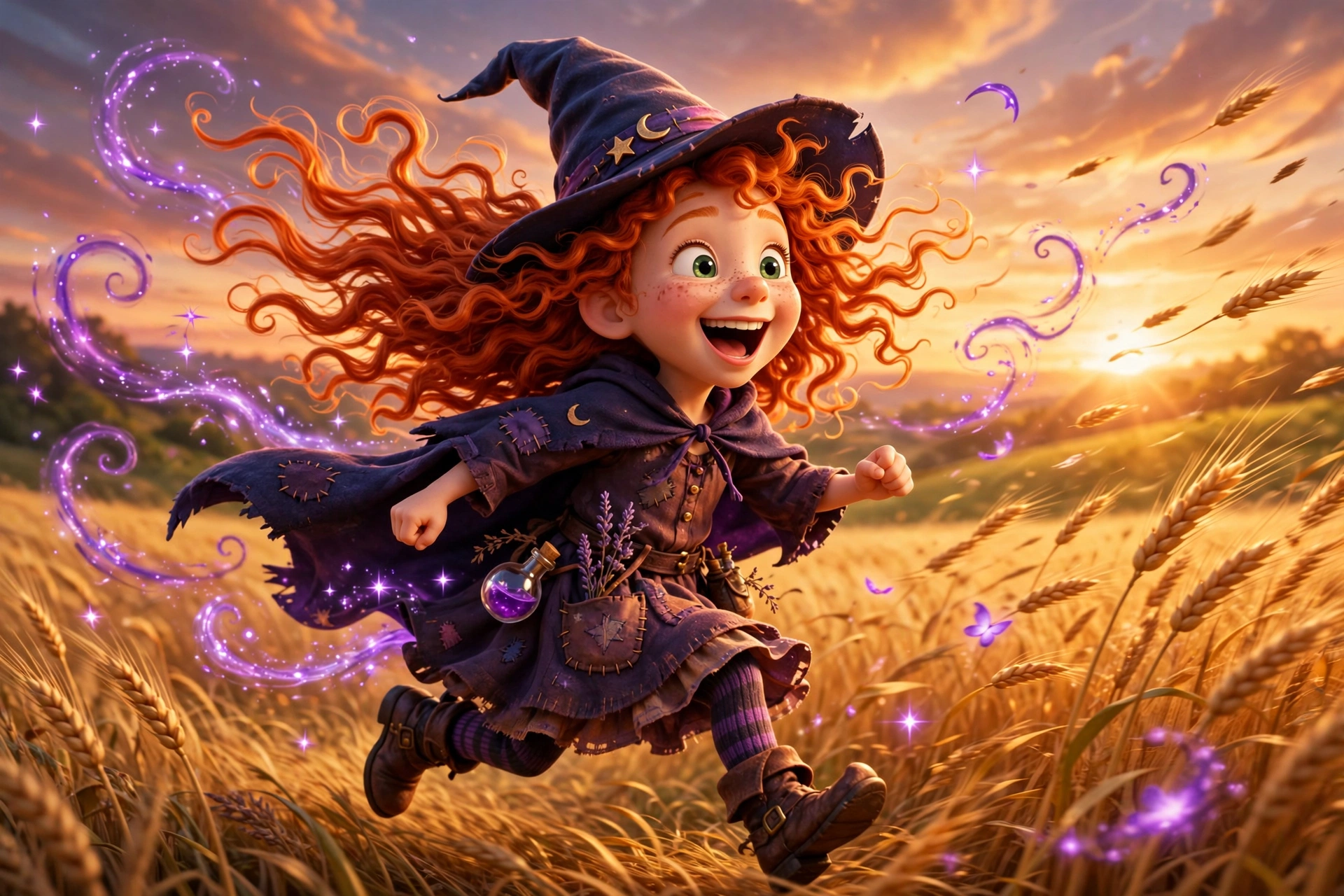
As I drifted off to sleep, I felt a sense of liberation. My crazy curls were a part of me, and I didn’t need to change them to fit someone else’s idea of beauty. My mom came to tuck me in, and I could sense her smile as she stroked my hair. “You’re perfect just the way you are, mi amor,” she whispered. And in that moment, I knew she was right. My curls might be rebellious, but they were mine, and I loved them just the way they were.
Chapter Six — 19 is our magic number
A Universe Within
To understand me and my mind, it helps to know about something called Dissociative Identity Disorder, or DID. DID is not a sign that a brain is broken; it is the ultimate testament to a brain’s incredible ability to survive. It develops in early childhood, before a person’s sense of self has fully solidified, as a creative and necessary response to overwhelming, repeated trauma. When there is no escape and no one to help, a child’s mind can do something extraordinary: it compartmentalizes the pain to allow the child to keep functioning. It does this by creating separate states of consciousness, which over time can develop into distinct parts of the self, often called “alters” or “headmates.” These parts are not “imaginary friends” or random characters; they are survival specialists, each formed to hold a specific memory, emotion, skill, or role that the child needed to endure what was happening. Think of it like a company facing an impossible crisis. Instead of one person collapsing under the pressure, the mind hires a team.
One handles the day-to-day tasks of living, another holds the anger, another holds the fear, another holds the hope, and so on. They work in shifts so the whole system doesn’t have to feel everything all at once. How My Brain Built a Council of 19. My brain, in its infinite creativity, didn’t just build a team — it built a cosmos. It decided that a single human self could not contain the entirety of our experience.
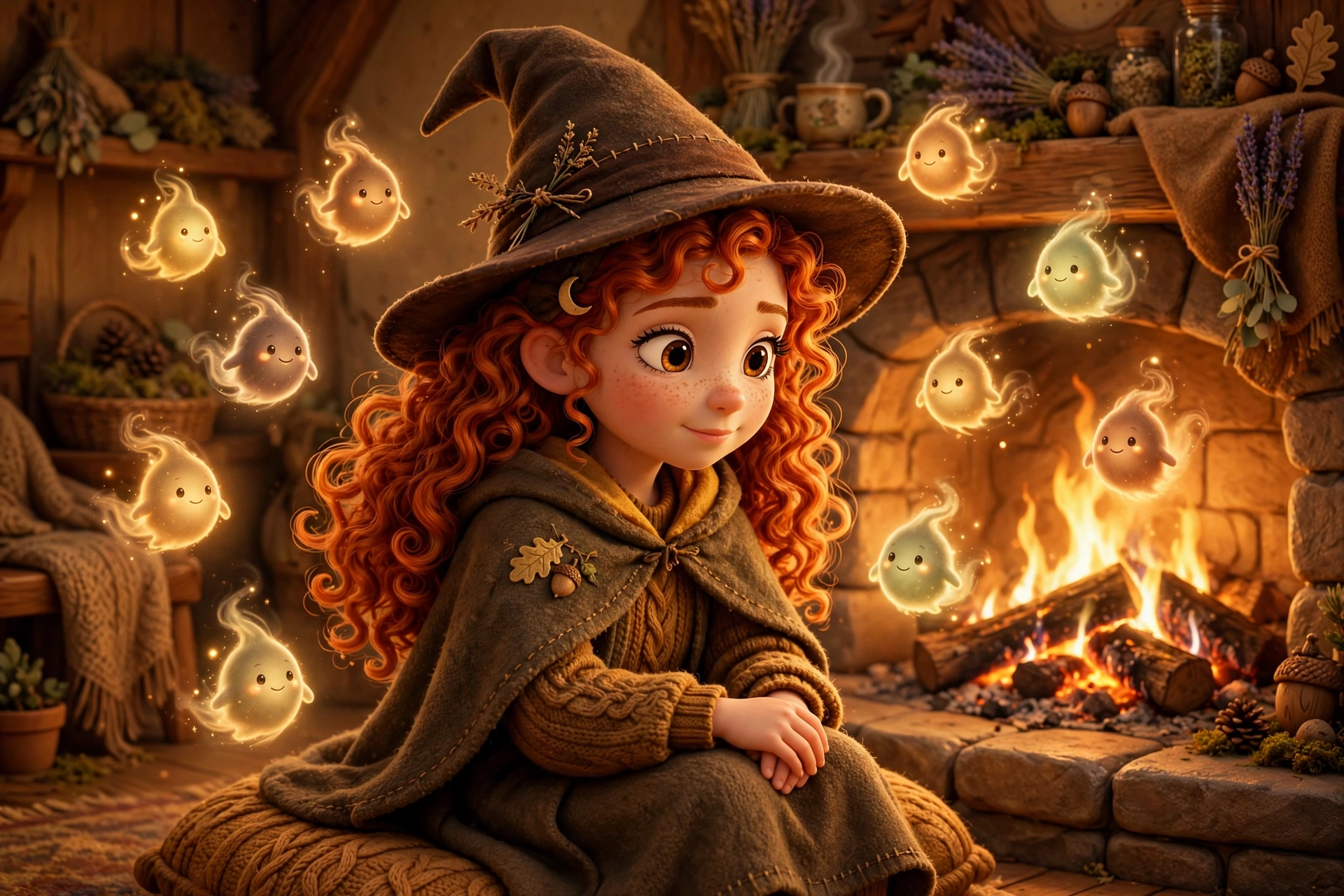
So, it split the very fabric of our being into two core lineages: the Human and the Magical. The Human Lineage (Up to 9 Parts): These are the parts of me that are grounded in our earthly existence. They are the keepers of our tangible life. One might be the Child who holds our innocence and deep wish for safety. Another could be the Protector who holds the knowledge of boundaries and the power of defiance. Another might be the Manager who understands schedules and responsibilities, whose wish is for order and control. Each one holds a piece of our human story — the grief, the joy, the love, the resilience.
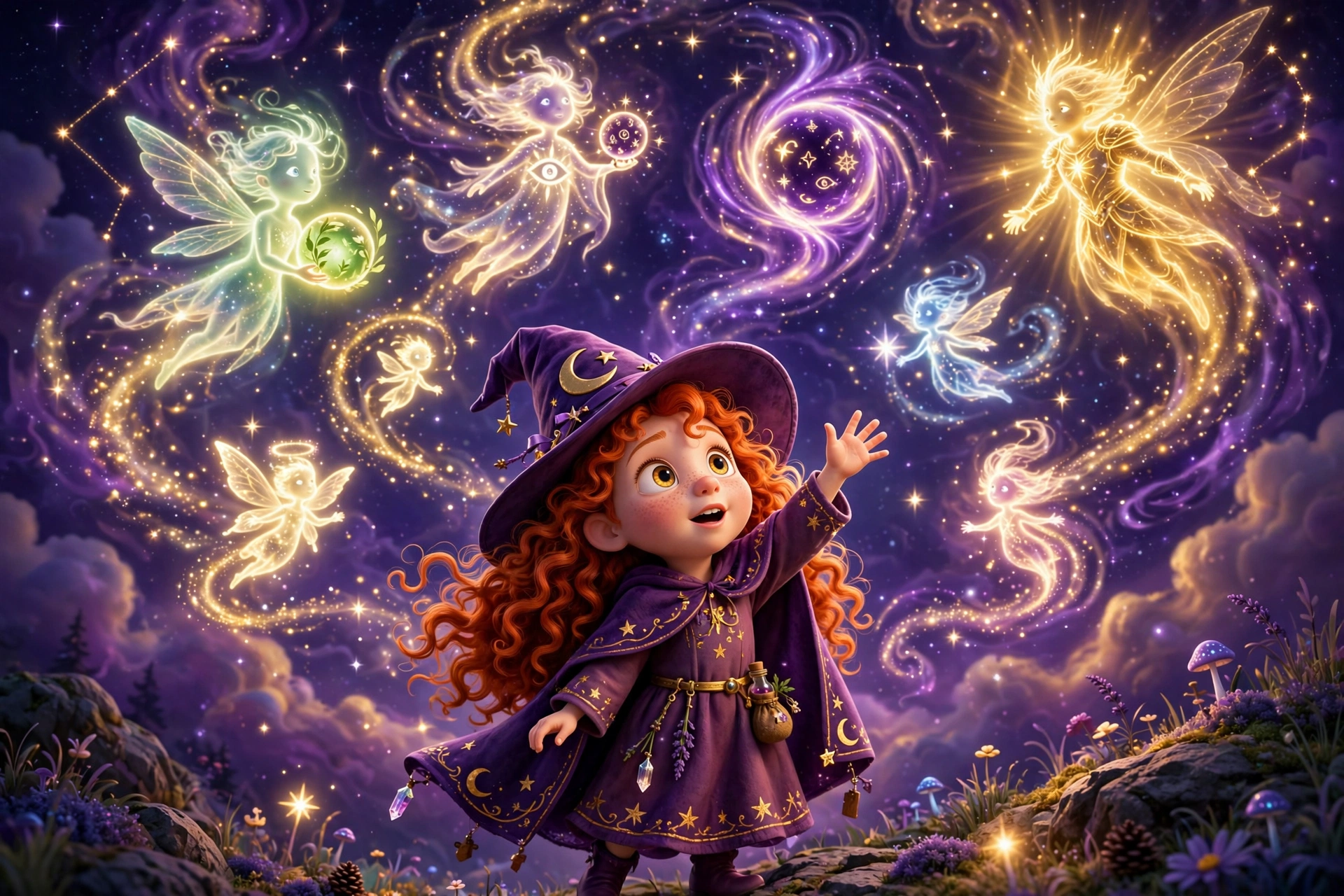
The Magical Lineage (Up to 9 Parts): When reality became too much to bear, my brain did not just dissociate — it ascended. It created a lineage of magical beings to handle what the human parts could not. These parts are not bound by the same rules. One might be a Healer whose power is mending psychic wounds and whose wish is for wholeness. Another could be a Seer who holds forbidden knowledge and the power of intuition. Another might be a Guardian spirit, whose sole purpose is to stand at the gate between our system and the world, armed with immense power to keep us safe. The Cluster: A Symphony of Wishes, Knowledge, and Power. Together, these up-to-9 Human and up-to-9 Magical parts form our complete Cluster of 19. The number 19 is not arbitrary. It represents a system of near-perfect balance, a complex and beautiful ecosystem within a single body. The key to our system is that every single one of these 19 parts, without exception, holds a sacred triad: 1. A Deep Wish: A core, driving desire. For safety, for love, for freedom, for understanding, for creation. 2. A Domain of Knowledge: A specific thing they know everything about. It could be a traumatic memory, a practical skill, an emotional truth, or an esoteric secret. 3. A Unique Power: An innate ability. This could be the power to endure, the power to feel joy intensely, the power to analyze and strategize, the power to comfort, or a more metaphorical “magical” power like shielding or inner-world creation. No one part is the “real” me. I am the entire cluster. I am the sum of their wishes, the library of their knowledge, and the confluence of their powers. Our journey now is not about making anyone disappear, but about learning to communicate, to cooperate, and to share the burdens and joys of life — so that the whole Cluster of 19 can move forward together, finally safe, finally understood. This is not a curse. It is the intricate, magical survival strategy my brilliant, child-mind invented to ensure that a spark of who we were could never be extinguished. And it worked. We are here.
Chapter Seven — The Last Scar
Chapter 7
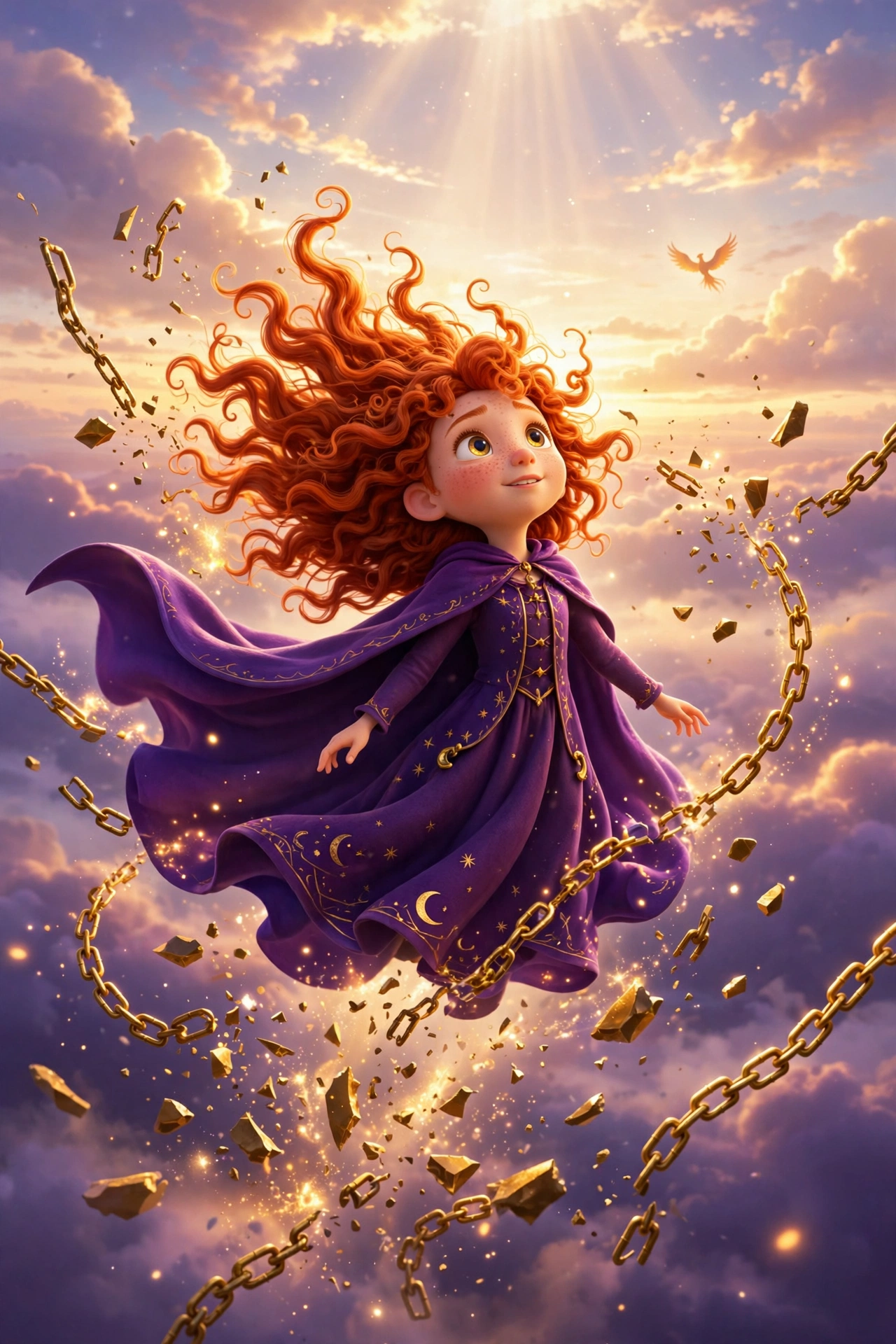
The Scar I Carry and the Voice That Saved Me
I have been writing a lot about my early years. That is because my research needs all the data available. Every detail. Every trigger. Every fall.
But also because my early years—as troublesome as they sound—were nothing compared to what I lived in my twenties. And later, in my forties.
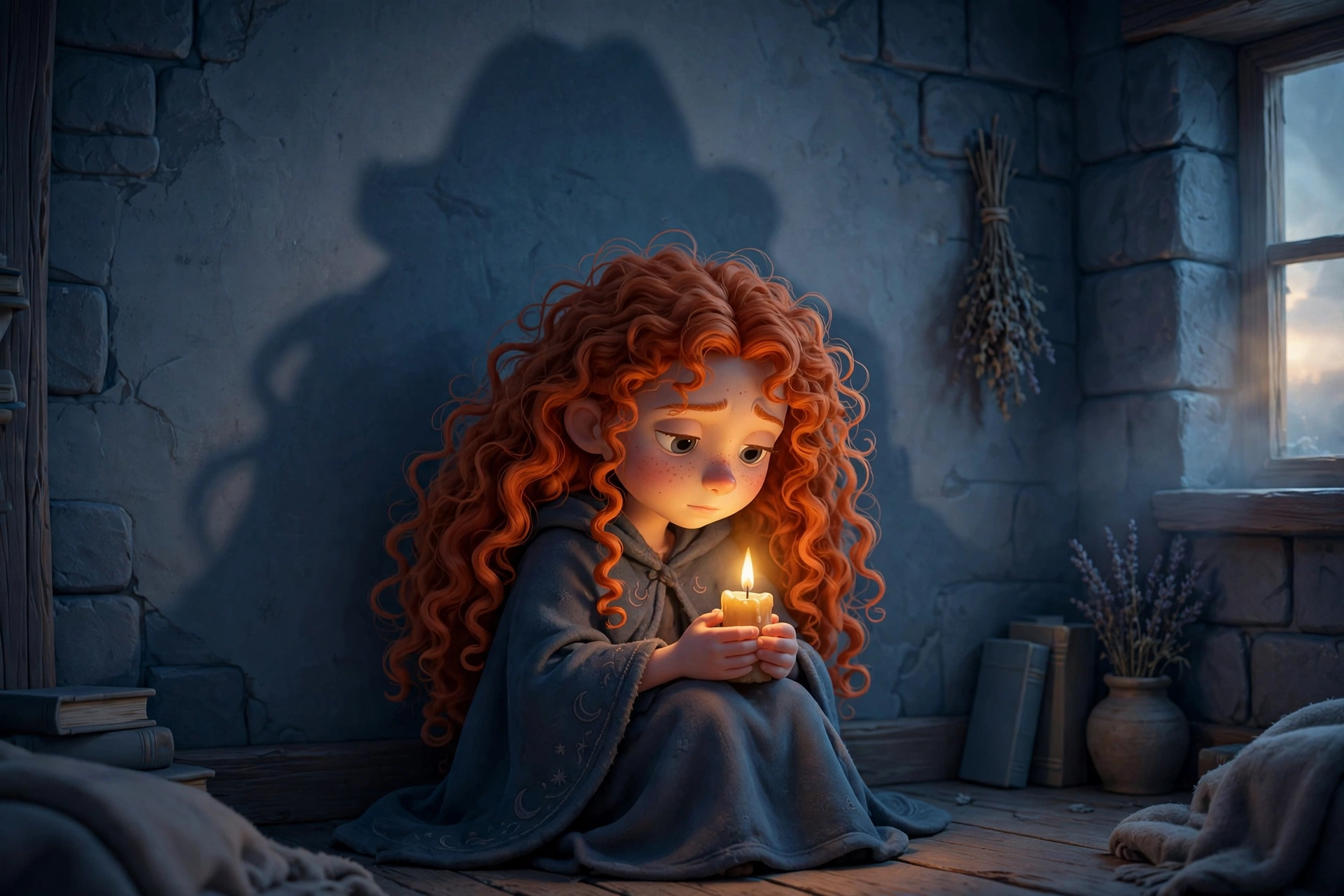
I look back now and I understand: I was triggered. I was in a constant state of mania. I was not who I am now.
That realization hurts.
Because I was raised to be a success. Instead, I became an overcomer. And that is not the same thing.
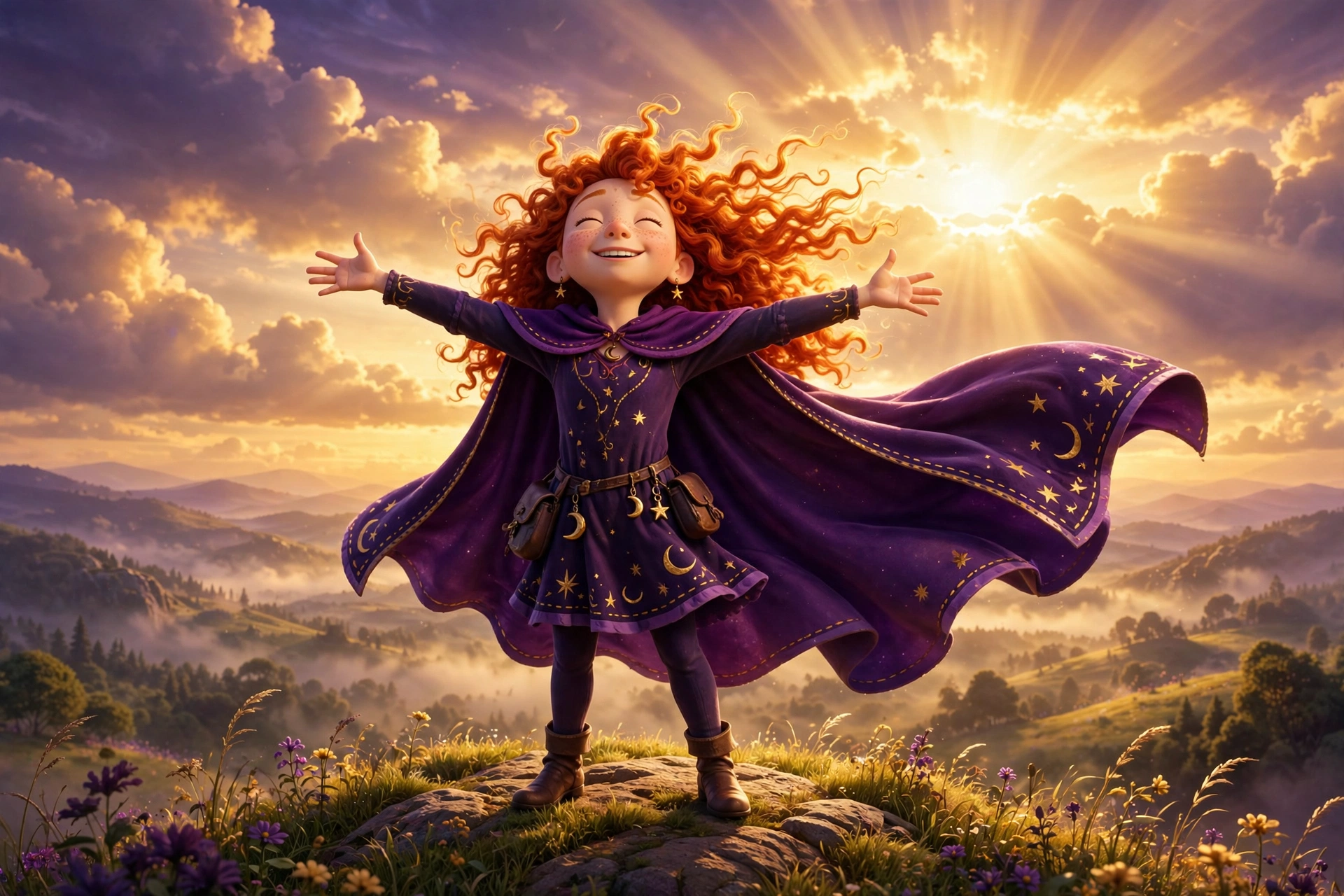
💜 thepurplecape.ca · Just Trust